Queen's University Belfast
MediPD — a pilot randomised controlled trial of an online Mediterranean diet programme for people with Parkinson's
A Parkinson's UK-funded pilot randomised controlled trial led by Queen's University Belfast, testing whether the 12-week MediPD online programme helps people with Parkinson's adopt and keep a Mediterranean-style diet compared with usual care, with diet adherence at 24 weeks as the primary outcome.
Why this research matters
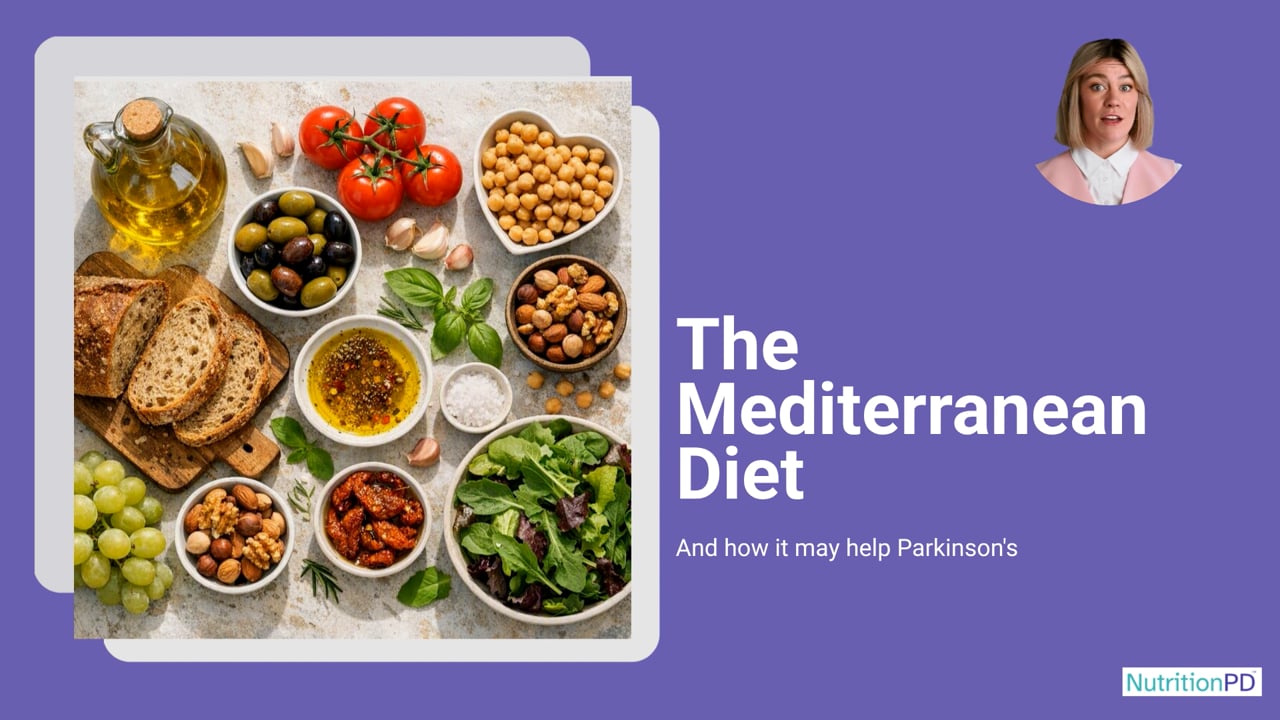
Diet is one of the few parts of daily life with Parkinson's that people can shape themselves, yet most people with Parkinson's never see a dietitian. The Mediterranean pattern of eating is well studied in general health and in brain health, but whether an online programme can help people with Parkinson's adopt it, and keep to it, has not been tested in a randomised trial. MediPD sets out to answer that.
Research questions
The trial asks whether MediPD is acceptable and practical for people living with Parkinson's, and whether it helps them make and maintain changes towards a Mediterranean-style diet. It also examines dietary intake, non-motor symptoms, gastrointestinal symptoms, quality of life and cognitive function, and how practical the programme is to use.
The intervention
Participants in the intervention group receive 12 weeks of access to the MediPD online programme: short educational videos developed by registered dietitians, personalised dietary information, practical resources, goal-setting and self-monitoring tools, and online dietetic support, delivered on the NutritionPD learner platform. The programme was user-tested with people with Parkinson's and care partners before the trial; that earlier evaluation is described separately and its results are not results of this trial.
Design
A pilot randomised controlled trial sponsored by Queen's University Belfast and funded by Parkinson's UK. One hundred and twenty adults are planned. Participants are randomly assigned either to the 12-week MediPD programme or to a wait-list control group that continues usual care and is offered the programme after the final study assessment. Participants cannot be blinded to an online dietary programme, so the principal investigator and the statistician analysing outcomes remain blinded to allocation instead.
The primary outcome is the change in adherence to a Mediterranean diet, measured with a 14-item Mediterranean Diet Score, from baseline to 24 weeks. Secondary outcomes, assessed at baseline, 12 and 24 weeks, include the diet score at 12 weeks, 24-hour dietary recall, non-motor symptoms (MDS-NMS), gastrointestinal symptoms (GSRS), quality of life (PDQ-39) and cognitive function (TestMyBrain).
Who can take part
As registered, participants are adults aged 18 or over living in the community in the United Kingdom, with self-reported idiopathic Parkinson's, access to an internet-enabled device and an email address, and low current adherence to a Mediterranean-style diet. Assessments are carried out remotely by the Centre for Public Health at Queen's University Belfast. Exclusions include atypical or secondary parkinsonism, a high risk of malnutrition, significant cognitive impairment, swallowing difficulties requiring a pureed diet, and previous participation in a My Moves Matter dietary programme.
Status
The trial is registered as recruiting, with study start on 10 October 2026 and primary completion expected in August 2027. People in the UK who think they may be eligible can register their interest with the research team using the "How to take part" link on this page; a member of the team will then be in touch, and registering interest does not commit anyone to taking part. Taking part always involves study-specific information and consent from the research team.
What this study can and cannot show
As a pilot trial, MediPD is designed to show whether the programme is feasible to deliver and study at scale and to measure its effect on dietary adherence against usual care, with early signals on symptoms and quality of life. It is not designed to show that diet changes the course of Parkinson's, and no such claim is made here. No results are available yet.
Facts on this page last reviewed 2026-10-24.